Lou Harper has done it again and created an stunning cover for The Bull Riding Witch. I couldn’t be more pleased.
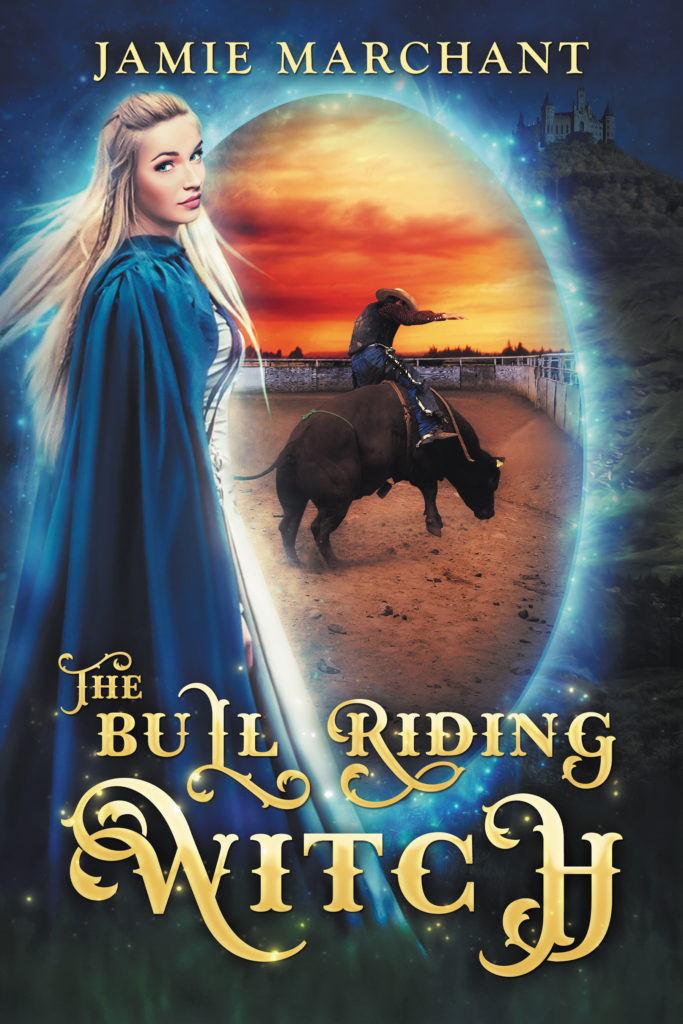
The novel will be released on July. Watch this space for more details.
Lou Harper has done it again and created an stunning cover for The Bull Riding Witch. I couldn’t be more pleased.
The novel will be released on July. Watch this space for more details.
The expanded edition of The Goddess’s Choice will be released on June 15. To celebrate, let me tell you how it all began.
 The Goddess’s Choice comes from deep within my childhood. My sister Jalane–she is ten years older than me–would tell me and my younger sister stories, fairy tales mostly: “Midas and His Golden Touch,” “The Three Little Men in the Forest,” “Hanzel and Gretel.” But my favorite was always “The Princess and the Glass Hill” or “The Glass Mountain” as my sister titled it. Wendie and I would have her tell that story over and over again. I was captivated by the bold hero on his magical horses of bronze, silver, and gold toiling up a mountain made of glass to win the princess’s hand.
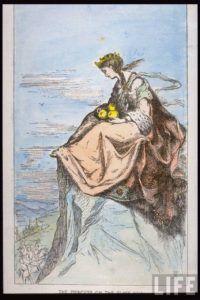 As I got older, the story faded from my consciousness. For years I hardly thought about it. Then in graduate school it came back to me in an essay I wrote. We were discussing children’s literature in a Women’s Studies course and had to do a personal essay on our experience with literature as a child. The story of “The Princess and the Glass Hill” figured heavily in that paper. That’s when the inherit sexism of the story was brought forcibly home. The princess has no name, no personality, performs almost no actions. She is not even described. She is nothing more than the prize–a trophy–to be handed off to the lucky man who wins her father’s contest. How she feels about the matter is not discussed, not even thought of, as I did not think about it when I was a child. I identified with the bold young hero of the tale, not the nearly invisible princess waiting at the top of the mountain with her golden apples.
After graduate school, “The Glass Mountain” made another appearance when I had a child of my own. I loved the story so much as a child, I wanted to pass it on to my son. Jesse loved it every bit as much as I had.
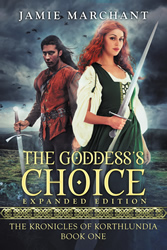 But one day after telling it to him, it came to me that the story could be so much more than the few pages and sparse details devoted to it in either the original or my sister’s version. Robbie (in my sister’s version, he was merely the youngest brother) was born sleeping in the attic on a straw mattress. Although that detail didn’t survive into the final version, it was the gem of the story. I also knew that my princess would be no passive character in the tale of another. The princess would be as strong and full developed as Robbie–a true heroine to match his hero. Samantha came to be, dreading yet another ball. She would far rather be riding her horse.
You can read the original fairy tale at The Princess and the Glass Hill. Jalane took a lot of license in telling her tales, so her version was more exciting than this one. Also, although the novel originated from a fairy tale, it is not a children’s story. It is definitely intended for adults.
 Magic is at the heart of fantasy, so it’s important for an author to get the magic right. You may argue that magic doesn’t exist. How can there be any “right” about it? Ironically, the very fact that it is imaginary makes its creation all that more problematic.
 Rule #1: Magic must have limits. Magic must not be infinitely powerful. Otherwise, the story really has no point. The readers must know exactly what magic can and cannot do.
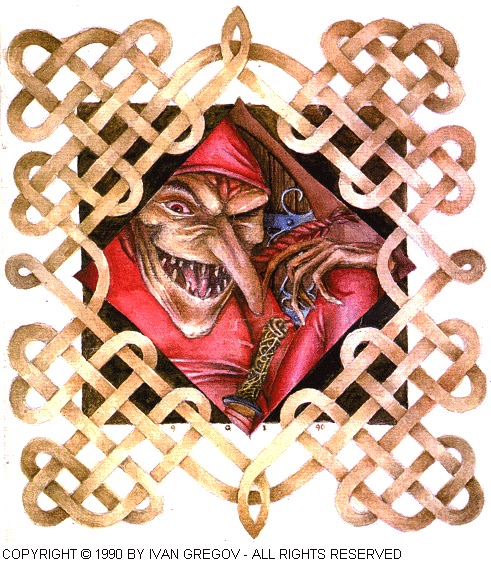 Rule #4. Magic must have costs. It can’t be too easy, or you will have readers rolling their eyes or slamming your book shut. My character Robrek is the strongest sorcerer Korthlundia has seen in hundreds of years, but it never comes easily for him. Even after a lot of training, he still finds himself blocked from the full strength of his talent. He learns that negative emotion hinders magic. He must forgive in order to access his full talent. (And he has a lot of things to forgive people for). Finally, even when he has succeeded in removing the obstacles that stand in his way, magic is exhausting. He can only work it for so long before collapsing. Magic is difficult and costs a lot. That is the only way magic is interesting.
This week Cinthia Ritchie, author of Dolls Behaving Badly, gives us some hints on writing dialogue. Come back tomorrow for an excerpt from her work.

Back in graduate school, the worst insult a writer could inflict on another was that their dialogue was forced or stilted.
Bad writing was one thing. Bad dialogue, quite another. It insinuated that the writer had failed not only in his writing but also as a listener. It implied that you were hopelessly unaware or socially inept.
It was a double-whammy.
I wasn’t immune, of course, and I sat in the stilted dialogue “hot” seat more than once, cringing and shuffling my feet and wishing I had studied accounting or biology or one of those studious sounding subjects like psychics or chemistry.
Years later, I often think of those words as I’m writing dialogue, and they still make me cringe.
Because, face it, writing dialogue is hard. People in books don’t speak as people do in real life, since we don’t spend our days advancing the plot forward. We have no idea that we are part of a plot. Real life isn’t like that.
Writing is. And dialogue is the heavyweight of the story, sweating under the burden of multiple tasks: emphasizing character interaction, highlighting situations and moving the plot forward. It also controls the pace and tension. Every dialogued word holds double, and often triple, meaning. If it didn’t, it probably should be written as straight text.
But how does one write realistic dialogue?
First, listen to people talk. Very few of us speak in full and proper sentences.
Imagine writing this: “Andy, please set the table for dinner, and don’t forget the china plates my grandmother left me in her will.”
Well, there’s nothing inherently wrong with that sentence, but there’s nothing great about it, either.
Try this instead: “Andy, can you set the table, and don’t forget Gramma’s plates.” That’s more of how we speak in our real lives.
But wait! Didn’t I mention earlier than dialogue can’t reflect real life since it’s obligated to hold so many nuances?
I did, which is why I advise creating tension by inserting small slices of narrative within a body of dialogue (and the operative word here is small).
“Andy,” she growled, “please set the table, and don’t forget Gramma’s plates.”
Or, “Andy, please set the table,” Jane said, cradling her head in her hands. “And don’t forget Gramma’s plates.”
That still might not be great writing but it does do what dialogue is meant to do: Create enough tension to keep the reader guessing and ultimately, continue reading.
Other dialogue don’ts:
Using bad dialect or too much dialect/slang.
Using too many pause words such as “ums” or “you knows.”
Not breaking up dialogue with narrative (you know the heavy feeling you get when you open a book to find pages of unbroken dialogue? Don’t do to readers what you don’t want done to you).
Limit the use of “he said” and “she said.” Substitute with more active words: She yelled, he stuttered, she whined, he coaxed.
Dialogue dos:
Give each character a distinctive voice.
Keep dialogue fresh, fast and snappy.
Write from the characters’ hearts, not just their heads.
Keep the conflict alive by implying, not stating, the obvious and not-so-obvious
Of course, just as we sometimes say things we later regret, it’s inevitable that we will find ourselves, on rare or even numerous occasions, writing bad dialogue. When this happens, don’t beat yourself or your characters up. Apologize, make the proper amends, and move on.
Cinthia Ritchie is a former journalist who lives and runs mountains and marathons in Alaska. Her work can be found at New York Times Magazine, Sport Literate, Water-Stone Review, Under the Sun, Memoir, damselfly press, Slow Trains, 42opus, Evening Street Review and over 45 literary magazines.
Links:
Website: www.cinthiaritchie.com
Facebook: http://www.facebook.com/#!/cinthia.ritchie
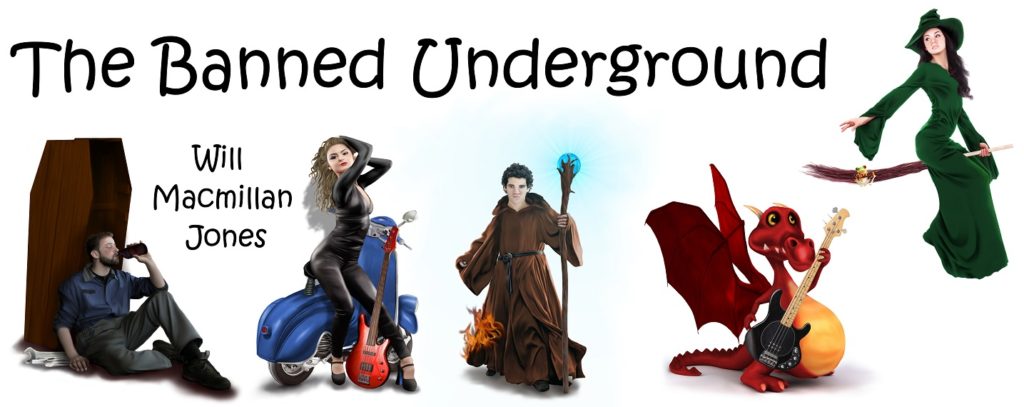
Welcome Will Macmillian Jones, a speculative fiction writer from the land of my ancestors (at least some of them), Wales, that is.
1. Tell us a little about yourself?
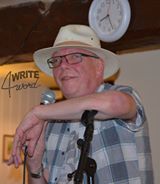 Hi Jamie, thanks for inviting me along to your blog. My name is Will, and I’m an authorholic (a term coined by a writing friend of mine M T McGuire–but she didn’t copyright it in time so I’ve nicked it. There’s a lesson for us all in there, isn’t there?). I’m a just sixty poet, novelist and oral story teller based in the Gwendraeth Valley, not far from the coast in West Wales. I do a lot of walking and draw a lot of inspiration from the myths, legends and countryside of this ancient land. When not writing speculative fiction, I’m a Consultant in International Taxation–so the two jobs are somewhat interchangeable. Should I have admitted to that? Oh dear. I was lucky enough to have had an English Lit. teacher at school who encouraged all his pupils to start writing, and I sort of forgot to stop. No that’s not quite true: I did stop for a long time after I got fed up of the rejection letters, and that is possibly one of the few things in life I regret. I really wish that one Stephen King had written his book–On Writing – many years before he actually got round to it. That would have possibly given me the encouragement to keep going at the time. Now I have a lot of ground to make up!
2. If you could have written any other book by any other author, what would it be, and why?
It would be Lord Of Light by the incomparable Roger Zelazny. His speculative fiction is simply masterful. The characters are so well drawn and believable, and his prose – well I think most of us would be very happy indeed if we could write with such easy skill. I understand that his Amber stories are being filmed right now – I hope that the film makers do him justice. GRRM cannot be looking forward to that coming out. Zelazny shows us all the true value of speculative fiction. It allows an author to hold a mirror to the world we inhabit, and through that mirror to distort, rearrange and examine us and our environment in new and interesting ways
3. Tell us something about how you write? i.e. are you a plotter or a pantser? Do you have any weird or necessary writing habits or rituals?
I’m a hybrid, I suppose. My humorous fantasy and the sci fi that I’m working on now tend to grow organically. I start with an idea, a concept or precept: wind up the characters and let them run. Very often I dream the next day’s writing sequence in the small hours of the night. My partner is used now to me crawling back into bed, freezing cold, at 3 or 4 am having just jotted down enough notes to make sure that I don’t forget my dreams. Luckily for me she is very tolerant… not of my cold feet though. I suppose everyone has their limits, don’t they? On the other hand the dark fantasy, or gothic horror, that I also write tends to be quite meticulously plotted. I will repeat that in capital letters METICULOUSLY PLOTTED in case either the publisher or my editor read this. They probably won’t believe it though, a tribulation that most of us speculative fiction writers have to suffer for our art.
4. What gives you inspiration for your books?
Funnily enough, my daughter was asking the same question recently. It isn’t an easy answer. About three years ago I was introduced to the ancient art form of oral story telling. It is a real skill, and I don’t pretend to be anywhere near as good as some of the tellers who live in West Wales. But learning the art from them encouraged me to read further back into Welsh Myth and the myths of other lands around the world. (Jamie’s note: I love Celtic mythology). I have found that the stories, at heart, are all universal, the themes of love, loss, hatred, revenge and greed. The art and skill of a novelist, poet, storyteller, is to look into the heart of these stories and then to weave the old stories around new characters and new settings, to show a new perspective on them and provide something that resonates with our times. And that, of course, applies to novelists too.
5. What was the hardest part of writing your book?
Marketing and selling it! Yes, I know, it is the most common complaint of all the authors we all talk to, isn’t it? How to sell the work? Some days it seems almost impossible to go online without being besieged – not by Orcs or deranged dwarves but by writers begging people to buy their latest offerings. Sometimes it’s kind of hard to tell the difference.
Of course, like everyone else I can get affected by times when the stories do not flow as smoothly as I would wish. To deal with that I have two strategies. Well, three if you include sitting under the desk and sulking, of course. Fortunately I do not resort to that too often. The first coping strategy is to be writing more than one thing at a time. Right now I have two files open on my word processor: the first is the sequel to the first sci fi novel, which will come out this summer. The second is the sixth and final book in the Gothic Horror series, The Mister Jones Mysteries. Very different works, written in entirely different voices and so providing me with some variety. Should one book stop on me, there is always the other calling… the second strategy is to go and write something totally different – Flash Fiction, or short stories with a maximum word count of no more than one thousand words. Some of those have won awards or competitions, and every one has provided me with some thoughts towards a new novel. I have around twelve novel outlines that have grown from these Flash Fiction stories, just waiting for my attention.
6. Titles have always been extremely difficult for me. How do you come up with yours?
Cheese! No, honestly. I eat a lot of cheese, especially in the evening. As a result I have some very odd dreams, and they frequently suggest book titles. (Jamie’s note: Now, I know the secret. I need to eat more cheese.) Titles are really important, in my view. They not only give a clue to the nature of the work (Love Amongst the Bulrushes for example, is unlikely to be a Slasher/Gorefest (unless your view of romance is somewhat cynical) and Gunfight at the Ranch is clearly going to appeal to those who love Westerns) but, unlike the two examples I have just quoted, should also attract and intrigue a potential buyer. I try to inject some humour into the titles too where possible. I see clearly when I am standing behind a display of my work at book fairs or conventions, that the first fantasy titles to be picked up are always The SatNav of Doom and The Vampire Mechanic . I spend a lot of time road testing titles too, asking people what they think will or will not work. I have a YA novel coming along about two teenagers who get sucked into a magical world through a painting. Initially this was to be called ‘The Rembrandt House’, but this didn’t attract the audience I talked to. Changing the title to ‘The Death Boat’ however did get the reaction that I was looking for and that will be the title on release..
Oh yes. As I said earlier, I am in the middle of the sixth and final in the Gothic Horror series, the fifth volume will be released very soon – I just have to work on some matters with my editor first.. After that, I have plans to write a number of stand alone Gothic horror/ paranormal works, and am already playing around idly with some concepts. I have the sci fi series that will keep me busy, the YA fantasy adventure and of course, the eighth in The Banned Underground collection needs to be finished off. I’m actually waiting until the collection of random jokes and gags has reached a reasonable level before cracking on with that one. Possibly a summer project. I also have The Last Viking to complete – a straight romance or general fiction novel. So many books to write, so little time…
Where can we find you online?
Blog: www.willmacmillanjones.wordpress.com
Website: www.willmacmillanjones.com
www.thebannedunderground.com
Facebook: https://www.facebook.com/william.macmillanjones
Twitter: @macmillanjones
Amazon: https://www.amazon.com/Will-Macmillan-Jones
Barnes & Noble: http://www.barnesandnoble.com/s/will%20macmillan%20jones
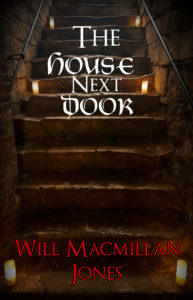 Mister Jones thought he had finished with the supernatural world – but the supernatural hadn’t finished with him…
When Sheila Balsam finds herself compelled to buy a genuine antique in a strange little shop, she didn’t bargain for what came with the statuette – and Mister Jones finds himself once again drawn into the dangerous world of the paranormal : this time via the house next door.
An ancient evil has found a way to break from his enchanted prison and the only one who is going to stand in his way is the unfortunate Mister Jones, who seems destined to live in interesting times.
The House Next Door is the third in the highly regarded ‘Mister Jones’ collection of paranormal mysteries.



PREVIOUSLY
In Season 1 of The Wizard Killer, we met a man with no name as he awoke from the dead with his short-sword impaled in his chest, his magic failing, and his memories scrambled.
As he ventured into the barren wasteland trying to figure out what had happened to him, he narrowly avoided being burned alive by a carn and eaten by a family of ghouls.
A chance encounter with a trio of bandits revealed he was something called a weslek, some kind of living mana-battery. Fighting alongside them in a desperate battle against two flaming carnu, the nameless man drained the remaining life force from one of the dying bandits, and shot another. The battle won, their leader, a magic-wielding woman named Ania, took off, leaving the nameless man with the haunted feeling that their business wasn’t over.
And in the final moments of Season 1, the nameless man and a oner woman raced against time to escape the wrath of the raw devastation being wrought by a floating city. As the city passed over them, ripping every speck of life and mana from the surrounding area, the oner woman sacrificed herself for a chance to save the nameless man.
Episode 3 (Part 1 of a Flashback Scene)
“Hey!” yells a deep voice, followed by a hard shove.
I stumble backwards, disoriented, knocking over the chair I must have been in. I hit the wall and slump down. My head feels two sizes too small. Where am I? Why’s my heart racing?
The smell of stale and rancid beer immediately assaults my nose, clearing some of the fog in my mind and waking me up.
Looking down at what’s on my hands, I’m distracted by the floor’s shiny, orange-and-brown sheen. Half my brain tells me the stuff on my hands feels like sandpaper; the other half, like dried snot.
My eyes go from the floor to my sleeve, and then to how I’m dressed. I’m wearing matching brown pants, vest, and long coat—all neatly pressed. On the uneven table in front of me sits a brown, bowl-shaped hat.
After a momentary debate of whether to rub my eyes, I decide against it and gaze about the rest of the bar, ignoring the figure standing beside me.
The tavern has ‘rock bottom’ written all over it. The dingy walls and bowing ceiling don’t do it any favors. There are a few high windows, though I suspect they’ve never been cleaned, and thankfully they’re keeping most of the morning light at bay.
The man standing beside me goes to flick my ear, and I slap his hand, glaring at him.
He clears his throat and glares back at me. He’s got a tall, stocky frame and a big, bushy beard that is dark brown with a white streak from lip to chin. In one of his meaty hands is a black bowl hat, his wiry hair showing that he’s been wearing it for a good part of the day already.
Under his dark long coat is a red-and-silver vest with the chain of a pocket watch showing. Most importantly, he’s got a two-bar, tin rectangle pinned on the outside of his coat and the scowl of authority to accompany it.
“Sheriff,” I say grudgingly.
His face relaxes a touch. “I’ve had to look all over town for you. You’ve almost missed your time to meet with the librarian, and if you miss this one, there ain’t going to be another. Now get up and get moving. She doesn’t stay in one place long. And if a Scourge patrol finds her? You’re going to be looking over both shoulders every minute of every day until you’re having a dirt nap.”
I put a hand out.
He reluctantly grabs it and hauls me to my feet. My head’s throbbing, and the empty beer mugs on the table tell me why. Rolling my other shoulder, it barks at me painfully.
“Mother of Mercy,” I say under my breath. I must have done something to it when I fell off my chair… or last night. All that remains of what happened is a vague hint, nothing more. I can’t remember walking into this place or drinking a thing. All the consequences and none of the fun, that’s no way to live.
“I know that look,” he grumbles, a disapproving smirk on his face. “When you strolled into town yesterday, I told you to stay away from the black beer. That stuff will knock the smile off a horse. I also told you not to play cards with the three sisters who run the place. From what I heard this morning, you’re lucky they left you with your dignity, never mind your clothes.”
I grimace as the shoulder pain subsides a bit. “I’ll keep that in mind.”
“Good. Now put some gloves on,” he says pointing at my bare hands.
I pull my sleeves up and stare at my arms. “Where are my tattoos?”
The sheriff raises an eyebrow. “I was talking about your hands.” He takes one of my hands and turns it sideways. There’s a blue line that runs along the edge, disappearing up my sleeve. I look at my other hand, it’s there too.
“Unlike most folk, I don’t care where you came from, and I care even less what horrible things happened to you to put that on you. I’m sure it’s why the librarian will meet with you, but I don’t want to know.”
He bends down and picks up a pair of gloves from under the table. “Put these on.” He then hands me my hat. “Keep your head down, and no one should notice the line at your neck.” He leans in. “You remember that much, don’t you?”
I nod and put the gloves and hat on.
“You all good?”
“Yeah,” I reply.
We step out of the bar and into the blinding, dusty outdoors. The sky’s got a familiar red haze to it. My fingers start rubbing together like they’re pulling on a fishing line with an unwilling memory on the end of it.
There’s about two dozen people walking about, all of them dressed up beyond what I’d expect for an outskirts town. Most of the women have shiny dresses and parasols, and most of the men long coats and hats. Either this place is rich in something, or it’s got a secret that some pay handsomely for.
Glancing about at the two-storey buildings and dirt-road nature of the town, knots start to form in my stomach. I’m not sure if I’m paranoid, or I remember something, but I’ve got a bad feeling about the place.
I nudge the sheriff and point at the red haze. “What’s that?”
He gives me a wide-eyed glare. “You stupid or something?”
I frown at him.
Leaning in, he whispers. “It ain’t smart to bring up the affairs of wizards and the like.”
I’m tempted to ask something else, but am interrupted by the image of a floating city being built. Mana leaks… it’s one of the things that can lead to this haze, I remember. Looking again, my stomach turns as I’m sure there’s something far worse going on than building a floating city.
“Come on, people’ll start staring,” he says, leading the way.
I keep my head tilted down as people walk by. “They’re building that pretty close to a town, aren’t they? I thought they were always paranoid about that type of thing.”
He gives me a sharp glare and gets right in my face, his hand resting atop the pistol on his hip. “I believe in upsetting the apple cart a bit every now and then. That’s why I’m helping you. There are things most unnatural happening, and they’ve got to stop. But I need you to understand; I ain’t going to risk my life or this town.”
I slowly nod. Everyone likes to be a little bit of a rebel.
“Wizards have eyes and ears everywhere. I’ve heard a man mention a certain one, and then out of nowhere appears a hot-headed acolyte with the powers of a god and trigger-happy soldiers with something to prove.” He pulls back and straightens his vest. “Now, shut up or I’ll shoot you. We clear?” He flashes a politician’s smile and starts moving.
Across the street’s a two-storey building with a sign reading General Store. There’s an old man, bald, staring at me.
I stare back. There’s something about him, like he’s a person standing among paintings, something that makes him more real than the rest.
Taking a step into the road, the sheriff immediately gets in front of me and shoves me back. “I think we’re having a communication problem.”
I point at the general store, but there’s no one there. “I thought I saw someone I know.”
“Doubt it,” he replies with a scoff.
I look first at the store’s door, which doesn’t look like it’s closing, and then around, but there’s no sign of him. The only thing out of place is a faint buzzing in my head. Strange. I can remember every detail of the man’s face. I swear I’ve seen him before… just not here.
Shaking it off, I follow the sheriff for a few blocks before tapping him on the shoulder.
He turns around, his face showing his frustration.
I raise a finger. “Do you hear that? There’s like— a clicking.”
He listens for a moment. “Might be coming from the trailer house,” he says gesturing at a long building coming up. “That’s where we have the levi-cars. A few horses, too. Sometimes those levis make funny noises when people are working on them.”
As we continue walking, I keep glancing about, unable to shake the feeling of being watched.
I perch my sweaty hands on my belt, feel something. Looking down, I see I’ve got an empty holster on one side. On the other, I’ve got an empty place for a knife. Yig, maybe there was something to that three sisters thing.
Finally, he stops and turns around, leaning towards the light-blue door of the white-washed two-storey building. Glancing around the main street, I’m sure that clicking sound is not coming from the levi’s place.
The sheriff takes his hat off and taps twice on the door with his knuckles. He listens for a second, then straightens up and puts his hat back on. “Go on in. You’ve got five minutes, and then you need to get out of here.”
I narrow my eyes at him, tempted to ask why.
He rolls his shoulders and scans the street, his hands resting on his pistols. Glancing at me, he’s got an anxious look in his eye. “Go on. Clock’s ticking.”
I start to push on the door and stop. “You hear it too, don’t you? It’s like… like hollow bone being hit on hollow bone.”
“Doesn’t matter. Scourge spies are going to know something’s up soon and I’m not going to have this town known as the place where the only free librarian died.”
My palms are sweaty, my heart’s racing. Something bad is about to happen. I just don’t know what.
Episode 4 – (2nd half of Flashback)
The sunlight from the door stops two feet into the room with no rhyme nor reason. Stepping into the room, I close the door and take my hat off.
I stand quietly, listening to the creak of the floorboards under me, waiting for my eyes to adjust. The room seems barren, except for a counter a few feet away.
“Gah… that sound.” I put a finger in my ear and give it a good shake.
A silhouette appears behind the empty counter. “These are dangerous times,” it says, the voice soft and melodic.
The head turns and I’m thrown off. It’s like staring at a star-filled night sky.
Swallowing nervously, I nod. “You’re the last of the free librarians I take it.”
There’s a scream outside, followed by another.
My hands twist my hat, and I stare at the door. “I’m…” I turn and face the librarian. “I’m told you’ll have an answer for me. Though, I hate to say it, I wasn’t told what the question was.”
“The answer is a yes. A wizard can be killed through means other than simply time and frailty of the body. There’s a High Acolyte who knows… in Banareal. He’s learned the secret experiments of his master, the Wizard of Banareal. The Wizard suspects him of treachery. It won’t be long before the High Acolyte is arrested and tortured.”
“Are we supposed to get him before he’s arrested? After?” I don’t even know what I’m talking about. Staring at the floor, an image comes to me. “Old man. Is he an old man?”
I can feel her staring at me; I’ve thrown her off.
“The High Acolyte will be alive for some time, though barely. The Wizard will experiment on him, to see if it’s possible to make an acolyte into a weslek.”
“So, we need to get him out?”
“The wards won’t allow him to leave the laboratory alive.”
I glare at the librarian. “How is this helpful?”
Several gunshots go off on the other side of the door. It’s followed by screeches and a wave of that bone-chattering sound.
“I must go,” says the librarian, pushing open a door at the back, the room filling with sunlight.
Wincing and turning away, I raise a hand. “If I follow what you’re saying, then we need to get him out of there. How do we do that?”
“Take his life from him then give it back. There are a few who can craft such magical weapons. You’ll need to be careful, and make it discreet.”
“Like one of the soldiers’ short swords?”
I wish she had an expression; I can’t tell if she’s agreeing or staring me like an idiot.
“We are out of time.” She exits and the back door closes, leaving me standing in the dark.
The screams outnumber the gunshots. There’s that clicking sound coming from everywhere, even above me somewhere.
I crack the door open a bit and look. The scene doesn’t make sense, people shooting at nothing and being ripped apart by nothing.
Without thinking, my hand goes into one of the long coat pockets and pulls out an orb. It’s maroon and sleek-looking, with a silver streak. Holding it up to my mouth, I mutter some words without thinking. The orb pulses.
“It’s the H. A. of Banareal that we need. He’s going to be taken soon, we have a limited window of time. Wards will stop us from taking him, so we need to suspend his life. We need to find someone who can put that kind of enchantment on a common item, like a short sword. Suspend his life; then we get him out of there.”
Leaning against the doorframe, sweat drips off my forehead. Bowing my head for a second, I recall someone warning me that the orb could suck the life out of you, but wow, I wasn’t ready for this. I feel like I’ve got the flu of the century.
I stroke the silver streak of the orb. It pulses once, and it’s done. I stuff it back in my pocket.
Alright, now I’ve got to get out of here.
Pulling the door open fully, I take in the gruesome scene. There are pieces of bodies everywhere.
Across the street, I see terrified people huddled together on the second-floor balcony. If this was a Scourge Patrol, they wouldn’t be safe up there, and I’ve known Scourge Patrols to be brutal but never to rip people apart like what I’m seeing.
I’m not taking any chances. I step out of the building, closing the door behind me. Glancing each way, I don’t see any fighting going on.
I give the orb a squeeze and toss it into the air. It falls, like a lump, to the ground.
I shuffle over and scoop it up. “Come on, you’re supposed to go.” Tossing it again, I glare angrily as it lands without dignity on the brown, dusty, main street.
Picking it up and shaking my head, I notice the sheriff’s body, one of his arms missing. A thought slips out from my foggy memories and I look around. “Whatever they’re doing that’s causing the red haze, there’s not enough mana in the air to activate the magic for the orb.” I glare at the ground. “What was I supposed to do?”
As if replying, the sheriff gives me the answer. “It needs more from me.”
Just then I catch sight of a blur in the wind, then two more. This isn’t what I needed.
I reach down and snatch one of sheriff’s long-barreled pistols. Spinning the chamber with the back of my hand, I see its got three hopes of me living loaded. It’s not much, but it might be enough to get me to more.
Scanning about, I notice that only the door to the general store is closed. Maybe people are holed up in there, or maybe it’s a front for something. Either way, it strikes me as a good place to go.
I make a dash for it, the clicking bone on bone sound erupting from everywhere. The people on the balcony start screaming and crying. They’ve probably watched and heard this play out a dozen times already; now they’re waiting for my torturous end. I hope to disappoint them.
Peeking over my shoulder, everything’s deformed and distorted, like I’m looking through warped glass.
“The wind spiders are all around you!” yells a woman from the balcony.
I’ve never heard of wind spiders.
Sliding to a stop in front of the general store, I turn and accidentally shoot blindly. Yig, down to two.
Holding the orb tightly up to my chest, I wait, my heart pounding. It feels like each thought of mine is fighting through a raging river to get heard, and the river’s growing.
My eyes dart about, waiting for the inevitable. Everything’s quiet.
I scream as something slashes my leg. Falling to the ground, I drop my pistol and put a hand over the bleeding wound. It’s like someone’s put warped mirrors all around me, making the whole world look weird.
I rub my blood hand on the orb. “That’s got to count for something,” I mutter.
The orb pulses twice as I get slashed again, this time from the left and right.
I feebly lob the orb into the air. My heart sinks as nothing happens, as it falls towards the ground. But then it turns, arcing up, and vanishes.
With renewed vigor, I grab the pistol and scramble backwards to the general store’s door. I bang on the door with one hand, and fire at a warped area. Nothing on either front.
I crane my head, looking up at the door, and bang hard again. Then I gasp, as something pierces my chest, pinning me to the door.
All I can get are short, shallow breaths. There’s blood seeping out of me.
Glancing about, I see there’s a slight purple in the air. Then I see it, in all its terrifying glory: the wind spider. It smells of death, and radiates sweaty heat.
I plunge the pistol into where I figure its mouth is and pull the trigger.
Yellow goo goes everywhere, and the other blurry images back off, at least for a moment.
The pistol tumbles out of my hand as it goes numb. I can’t breathe. My head hurts.
I close my eyes, waiting for the inevitable.


Killing your darlings is a phrase you see used to recommend you kill off your favorite bits of prose. The idea is that if they are too precious, too treasured, it will show and distract from your story rather than adding to it, or that they may be doted on by you for good reason, but add nothing. For darlings of this nature, I can only hope you don’t have to slay them because they are perfectly attuned both to their place in your story and to your style. One would not want Raymond Chandler to remove the tarantula from the piece of angel food cake.
I’m talking about killing even more precious darlings, your favorite characters. I’m talking about it for a couple of reasons. First because I’ll be killing off a character I like quite a bit in my next book, and because it’s rather painful, I’m looking at the map of the moment for my series, and wondering if I need do it again. Need in my case because my series is quite dark, and if I guard my loved ones too closely, it is likely to lose reality for the reader. I have about five books planned in all, with possibilities to branch out beyond that. The number is small enough that I may only have to sacrifice the one darling. But if I were writing a longer series, I believe something dire would have to happen to someone of import.
The second reason plays into and off of the first, as I’m about two thirds of the way through Elizabeth George’s latest mystery, Just One Evil Act, and things are looking very dire indeed for a couple of favorites, and if she carries through with the darkest possibilities, the repercussions will ripple outward to yet more beloved characters. And, because she has been ruthless in the past, I know these darlings are not safe. Perhaps they will not die. Perhaps they will not be ruined. But perhaps they will, and I’m filled with dread and fascination about where she will take the story. The emotional risk is far more riveting than any car chase or barroom brawl could be.
In one of my all-time favorite historical series, The Lymond Chronicles, Dorothy Dunnett was also absolute ruthless in killing off favorite characters. I was often devastated at the loss, but I admired and respected her as a writer for doing it because it gave the books more emotional power. Blake’s 7, a very dark British Sci Fi TV series leaps from dramatic space opera to superb and stunning tragedy in its last episode as the darlings fall dead. I think about amazing show too, though I know I don’t want a tragic outcome for my series.
If you are writing genre romance, or writing a cozy, you won’t want a tragic or unhappy outcome. You probably won’t want to kill off a sympathetic character. Your reader wants to remain safe from emotional bruising. But even a small step into the darker realms of those or related genres, romantic suspense, say, or any mystery series beyond the light classic, should lead the writer to question if killing off a darling might give greater power and reality to their book.
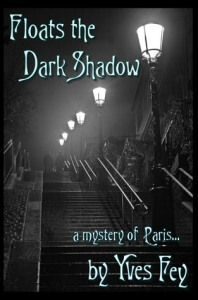 FLOATS THE DARK SHADOW is a literary mystery set in the dynamic and decadent world of Belle Époque Paris. Aspiring artist Theodora Faraday and Detective Michel Devaux clash in their search for a mysterious killer who has already claimed too many children. Classic detection and occult revelation lead Michel and Theo through the dark underbelly of Paris. Following the maze of clues they discover the murderer believes he is the reincarnation of the most evil serial killer in the history of France—Gilles de Rais. Whether deranged mind or demonic passion incite him, the killer must be found before he strikes again.
Floats the Dark Shadow is Yves Fey’s first historical mystery, set in the dynamic and decadent world of Belle Époque Paris. It won several 2013 Indie awards–a Silver IPPY in the Best Mystery category, a Finalist Award in the ForeWord Book of the Year Awards in mystery, and it was one of four Finalists in both History and Mystery in the Next Generation Indie Awards.
It’s available in hardback, paperback, Kindle, and now as an audio book.
Previously Yves wrote four historical romances set in the Italian Renaissance, Medieval England, and Elizabethan England. She will soon be republishing these under her own name of Gayle Feyrer.
 Yves has an MFA in Creative Writing from the University of Oregon, and a BA in Pictorial Arts from UCLA. She has read, written, and created art from childhood. A chocolate connoisseur, she’s won prizes for her desserts. Her current fascination is creating perfumes. She’s traveled to many countries in Europe and lived for two years in Indonesia. She currently lives in the San Francisco area with her husband Richard and three cats, Marlowe the Investigator, and the Flying Bronte Sisters.
George R. R. Martin is quite famous for doing this. How do you feel when your favorite character dies?
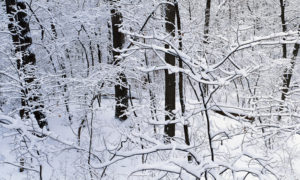 Being about half a Celt (Irish, Scottish, and Welsh ancestry), Celtic culture has always drawn me, and in my Kronciles of Korthlundia series, I looked to ancient Celtic traditions for inspiration. Last week I discussed how Litha, the summer solstice, is celebrated in Korthlundia. Today I bring the winter solstice to life. Winter Solstice is the shortest day or the longest night of the year and has special significance in Celtic and most pagan cultures. It is the origin of Christmas. The Bible gives no indication of when Christ was born, except a ruler would hardly call for a census in the middle of winter. Early Christian leaders timed Christmas when they did because they couldn’t get people to stop celebrating Solstice, so they co-opted it.

Solstice is also deeply important in Korthlundia. It is the crown princess Samantha’s favorite holiday and is featured prominently in The Goddess’s Choice. At court on Solstice morning, the nobles parade through town giving presents to children who line the road way. Samantha loves this part of the holiday. The villain Argblutal is able to impress her with his generosity on Solstice, so she chooses him to lead the men in the Solstice, a clear sign of her favor that is the next thing to announcing a betrothal. At night the court gathers in the courtyard where a huge pile of wood awaits the light of the torch. The priestess (or priest) speaks the words of the Solstice blessing, “Oh mighty Sulis, we dedicate this night and this dance to you. Let our fires and our energy feed the sun and bring it back with the strength of summer.” Then Samantha lights the wood with a torch and begins the dance around the bonfire alone.

The other members of the court gradually join in until all dance with wild energy that differs from the traditional court dance. The energy of the dancers is said to feed the ritual. Also, “the mingling of a man and a woman on Solstice night was said to be pleasing to Sulis: the energy produced by the mating encouraged the sun’s return.”
The commoners celebrate in a similar manner with bonfire, dancing, and sex.
What is your favorite holiday tradition?
This week my guest is R.J. Leahy, author of the hilariously funny mystery, Fat Chance. He writes on how to write comedy. I’d listen to him because his book proves he knows how what he’s talking about.
 It’s an old acting cliché, but it could just as easily describe the difficulty in writing humor into fiction. It’s easy enough to make people cry. We’re all saddened by the same things: heartache, illness, death. But humor is strikingly individualistic. What’s funny to one person may not be to another (flipping through the channels one day, I happened upon a Three Stooges short that soon had me laughing out loud. This earned a pained expression from my wife, one that could best be described as, pity).
And unlike the visual comic who has other tools available: facial expressions, pregnant pauses, and most importantly, other audience members to help push the comedy along (ever notice how much more easily you laugh when everyone around you is laughing? Hence the invention of the laugh track), for or better or worse, we have only the written word to get our readers to smile.
But as difficult as humor is to get right, it is a tool every writer needs in his box. Even the bleakest novel can benefit from a bit of levity, if for no other reason than to give the reader a break from the intensity. Like everything else in writing, an ear for humor is developed from experience and practice, but you may find the task easier, if you follow a few simple rules.
1.) If your character cries/laughs, your reader doesn’t have to.
Dialogue should be funny to the reader, not the characters. The characters play it straight. Only we, the readers, should catch the joke.
“That’s him, that’s the one. He hit me, Capt’n.” Quig touched the growing lump on his head. “And hard, too.”
The Captain held up his hand. “How many fingers do you see?”
Quig looked down, kicking at the grass. “Aw Captain, you know I’m no good at me numbers.”
“Aye. Just checking. Many a time I’ve seen a blow like that shake loose a few extra smarts in a fellow. Don’t appear it did in your case. Pity.”
Having a character laugh at something obvious is a classic case of, “hanging a lantern”—an annoyingly unsubtle way to point out to the reader that this was meant to be funny.
.
2.) Like perfume, humor should be discovered, not announced.
Tom: I can’t believe we avoided stepping in puddles for six blocks, just to have a truck splash water all over us!
Mike: I know. It’s totally ridiculous!
Talk about hanging a lantern. Never point out the irony or incongruity of a situation. Readers should be able to figure it out themselves. If not, you’ve missed something.
3.) Don’t give us a stand-up routine. Humor flows from the character’s interactions within the novel.
Too often, writers try to insert jokes into their prose. This seldom works. Humor should be a natural outflow of the character’s personality. Is he sardonic, cheerful, introverted, stoic? The type of humorous thoughts, actions and dialogue you attribute to him should be consistent with his personality. That doesn’t mean he can’t step out of his comfort zone from time to time, but be true to the nature you’ve given him.
4.) Don’t forget your narrator.
Unconventional similes and metaphors; irony and exaggeration; they can all be used by the narrator to add humor to a piece, either subtle or broad. Hitchhikers Guide; Catcher in the Rye; Even Cowgirls get the Blues, are only a few of the works that use the narrator masterfully to convey humor and wit.
Which brings us to the final piece of advice: Read. Find those books that make you laugh and study them.

Hello and thanks for visiting today on the blog tour for The Bow of Destiny and An Arrow Against the Wind which are the first two editions of The Bow of Hart Saga.
One the more frequent comments I receive concerns the covers of both books. I’m very pleased with these covers and I’m often asked if I created them myself to which I answer that I did not. That distinction goes to my cover artist, Christopher Rawlins out of the UK, from whom I commissioned the covers.
Many self-publishing authors rely on a service to create a mock-up of a stock photo since their books are set in the real-world. However, science fiction and fantasy books often require more than this kind of cover. Fantasy readers especially like to see original artwork since the books in this genre are often in alternate worlds. As such, original artwork is a premium on which I chose to spend money.
I’m often asked how to choose an artist by other authors and my answer is, “I don’t know.” I found my artist quite by chance based on the image I needed. Since the series is based on archery, I knew I needed a cover with an archer. I happened to find one such image entitled, “Robin of Loxley”, on the internet. It’s a very good rendering of Robin Hood by Christopher Rawlins and it immediately caught my attention as something like what I needed for my cover.
I contacted Christopher and asked about doing a cover based on that picture of Robin Hood and he agreed to take on the project. I sent Christopher some descriptions and ideas and he nailed it on the first try. From there we made a few minor additions and changes to end up with the cover of the Bow of Destiny.
For An Arrow Against the Wind, I went back to Christopher with a few ideas and more characters to add. Christopher then let me know which idea fit best based on the other cover and sent me a mock-up. There were several changes needed to the characters but the basic image was spot on, especially with all the fore-ground and background details. It’s a different setting than the first book but just as eye-catching.
I’m extremely pleased and thankful to be working with such a good artist as Christopher Rawlins. He’s even designed my print cover for The Bow of Destiny which I hope to use in the coming months as I look to release a print version of the series. I still need a print cover for An Arrow Against the Wind but that isn’t a major issue. However, over the next few months, I’ll need to come up with ideas for the last book of the series, The White Arrow, and I’ll be working with Christopher again when the time comes.
Thanks for visiting on this stop of the tour and for your interest in The Bow of Hart Saga books, The Bow of Destiny and An Arrow Against the Wind. Please see the buy links or my contact links for more information about the books. Have any thoughts on fantasy cover art? Leave your thoughts in the comments section and I’ll reply.


